The Price of Departure: Romania’s German Minority and the Politics of Emigration
For centuries, German-speaking communities in Transylvania formed one of the most distinctive societies in southeastern Europe. They founded towns, built fortified churches, organized trade and crafts, and developed institutions that gave them an unusual degree of autonomy. Yet by the end of the twentieth century, most had left Romania. Their departure was not a single migration, but the result of war, persecution, economic pressure, diplomacy, and a deeply controversial arrangement that put a price on emigration.
A frontier community with deep roots
The story begins in the middle of the twelfth century, when Hungarian King Géza II invited settlers from the German-speaking lands to colonize parts of Transylvania. Many came from the Rhine-Moselle region and what is now Luxembourg. Hungarian administrative language referred to them as “Saxons,” which is why the community became known as the Transylvanian Saxons, despite having no direct connection to the modern German state of Saxony.
The settlers were given land known as the Königsboden, or Royal Land. It remained under the direct authority of the king rather than local nobles or the church. In 1224, King Andrew II confirmed their rights in the document known as the Golden Charter. The charter granted territorial self-government, elected officials, their own courts, freedom from certain customs duties, and access to free markets. In exchange, the settlers were expected to defend the kingdom’s southeastern frontier.
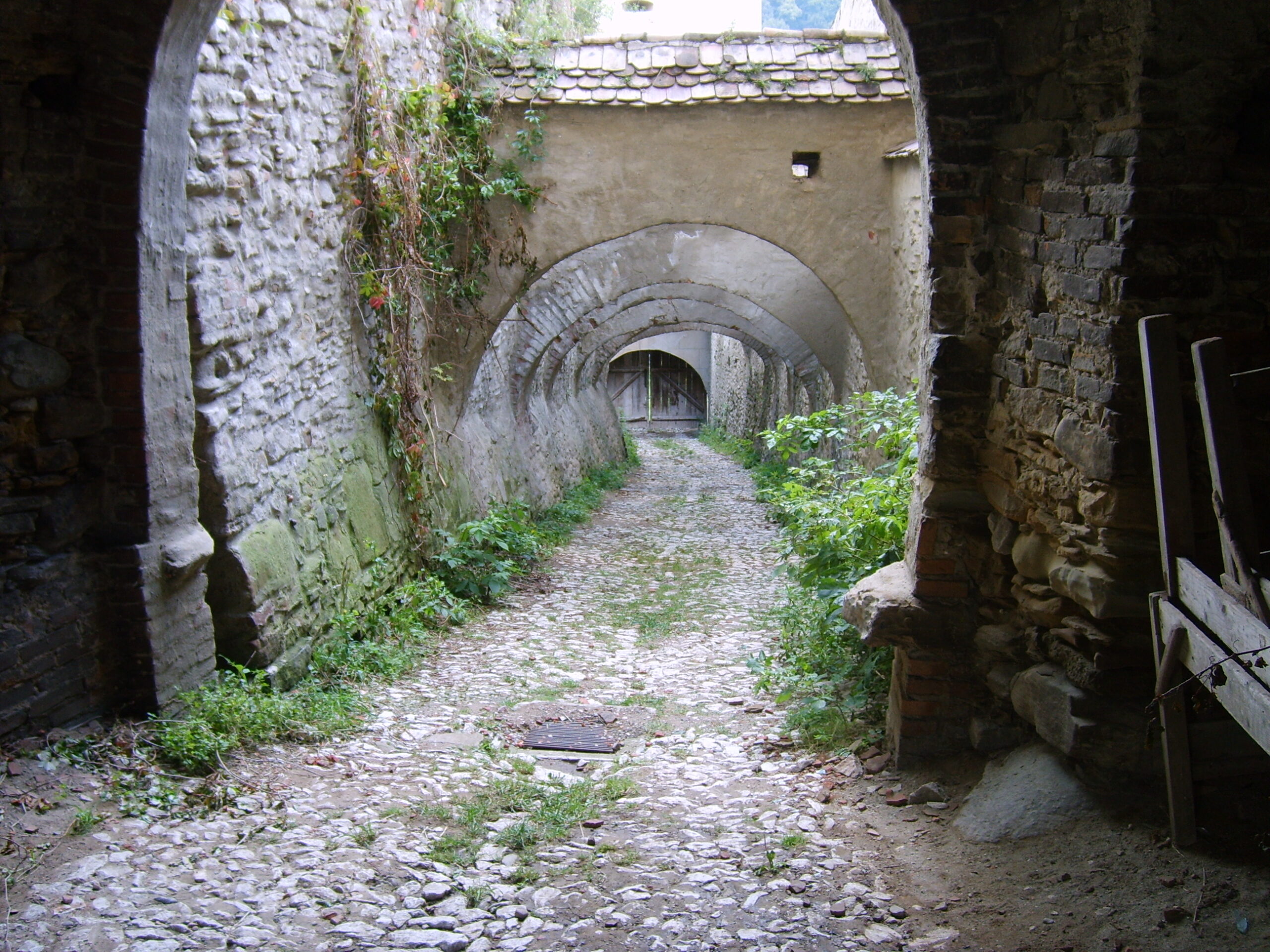
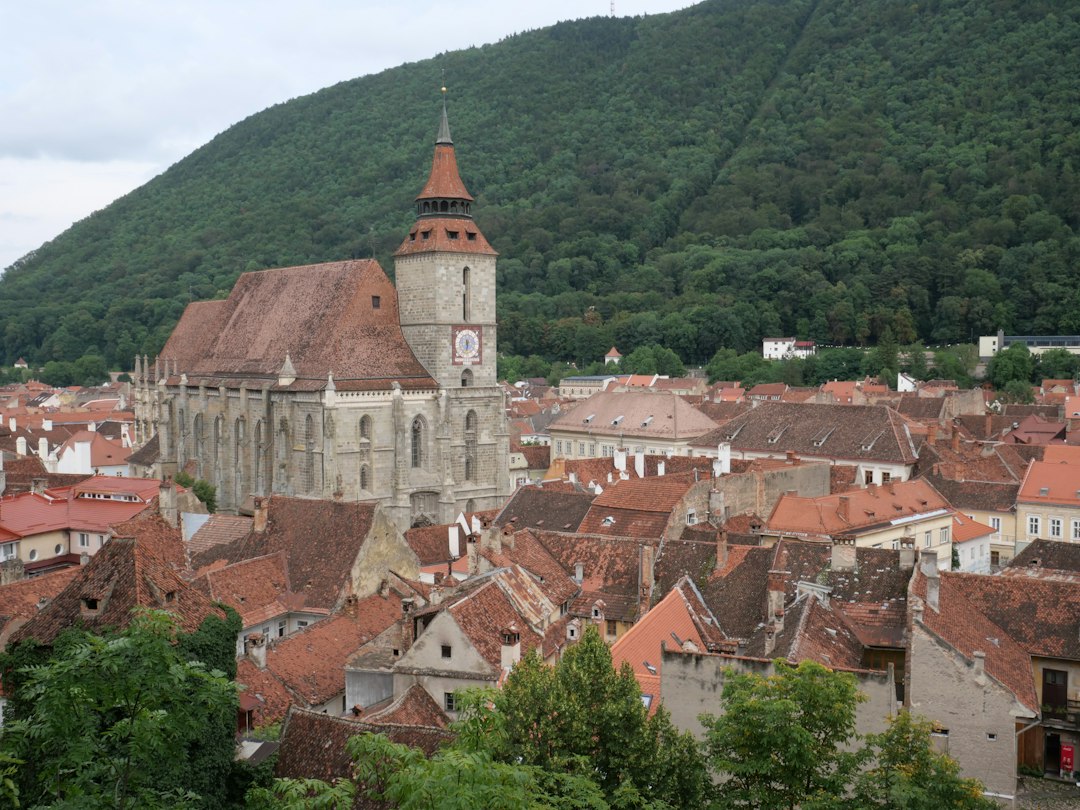
This arrangement helped the community prosper. Cities such as Hermannstadt, now Sibiu, and Kronstadt, now Brașov, grew from German settlement. By the fourteenth century, guilds connected the region to wider European commercial networks. The most recognizable legacy is the fortified church: religious buildings surrounded by defensive walls, towers, and storage rooms. Hundreds were built or developed as villages prepared for repeated Ottoman incursions.
War and communism break an old social order
The community’s medieval privileges gradually disappeared as political control over Transylvania changed. By the late nineteenth century, the Royal Land survived mainly as a historical memory. German-speaking residents remained economically and culturally influential, however, and their communities continued into the twentieth century.
The decisive rupture came after the Second World War and the establishment of communist rule. The German minority was treated collectively as suspect, often on the assumption that its members had collaborated with Germany. Individual responsibility was frequently ignored. In January 1945, able-bodied Germans were deported to forced labor in the Soviet Union. Men between 17 and 45 and women between 18 and 30 were targeted; of roughly 75,000 deportees, an estimated 15 percent died.
Further upheaval followed in 1951, when many families were forcibly relocated to the Bărăgan Plain. Confiscations destroyed much of the community’s economic base. By 1948, approximately 345,000 people of German ethnicity were recorded in Romania, but the political climate taught a generation that their heritage could itself be a liability. Leaving the country was not officially encouraged, and anyone who applied to emigrate could risk employment and social standing.
When emigration acquired a price
During the 1960s and 1970s, West Germany increasingly sought permission for Romanian Germans to leave. Negotiations were handled with unusual secrecy. The West German government assigned lawyer Heinz-Günther Hüsch to conduct talks with Bucharest, while the Romanian side insisted that departures should bring financial compensation.
The arrangement did not use one universal fee. Romania demanded different amounts depending on a person’s education and occupation, arguing that the state had invested in training and should be compensated when that investment left the country. The resulting categories placed academics at the top, skilled workers in the middle, and children at the bottom. Contemporary accounts describe figures of roughly 11,000 West German marks for an academic, 25,000 for a skilled worker, and 1,800 for a child.
The process was conducted through agreements presented publicly as private arrangements between lawyers. Names, addresses, and passport numbers were supplied in lists, and payments were made in hard currency. For Romania, the arrangement served two purposes: it removed a minority the regime regarded as politically inconvenient and brought in foreign currency during a period of severe economic strain. For West Germany, it offered a way to secure the release of people who wanted to leave without publicly acknowledging a transaction that could be described as the sale of human beings.
Estimates suggest that around 226,000 people reached West Germany through this system, while total payments exceeded one billion marks. Both governments had strong reasons to keep the mechanism hidden, and the language used to describe it remains contested. Supporters saw it as a humanitarian route out of dictatorship. Critics argue that it accelerated the disappearance of a historic community by turning its members into a source of revenue.
The exodus after 1989
The fall of Nicolae Ceaușescu’s regime in December 1989 removed the main barrier to emigration. What had previously been a controlled trickle became a mass departure. In 1990 alone, more than 11,000 Romanian Germans left. In some Transylvanian communities, around 80 percent of residents had departed by autumn, leaving houses, farms, churches, and local institutions without the neighbors who had sustained them for generations.
Another wave followed later in the 1990s. Between 1995 and 1999, more than 14,000 people emigrated. By the 2010s, departures had slowed to only a small number because so few members of the original community remained. The demographic balance had been completely reversed: a large population in Romania had become a diaspora of roughly a quarter-million people living in Germany.
A political afterlife
The community’s disappearance from everyday Romanian life did not erase its historical importance. In 2000, Klaus Iohannis, a member of the German minority and a physics teacher by training, became mayor of Sibiu. He later became president of Romania in 2014, the first head of state from a national minority in the country’s modern history.
His rise created a striking historical contrast. A community reduced to a small fraction of its former size produced the leader of the state from which many of its members had been pressured, expelled, or effectively bought out. It was a reminder that minorities can lose their demographic weight while retaining cultural, institutional, and political influence.
What remains
The history of Romania’s German minority is not only a story of migration. It is also a study in how states treat communities that are useful in one era and unwanted in another. Medieval rulers invited settlers to strengthen a frontier. Communist authorities punished and displaced them. Later, the same state converted their departure into a source of foreign currency.
Today, fortified churches, town centers, archives, and family memories preserve evidence of an eight-century presence. Events marking the anniversary of the Golden Charter have drawn former residents and descendants from Germany, Austria, North America, and elsewhere back to Transylvania. Their return does not reverse the exodus, but it shows that a community can survive as a cultural network long after it has ceased to be a majority in the places it built.