North Rhine-Westphalia: Germany’s State Built Around Coal
North Rhine-Westphalia is home to roughly 18 million people, major cities such as Cologne and Düsseldorf, and the historic industrial belt of the Ruhr. It is Germany’s most populous state and one of Europe’s most important economic regions. Yet its existence is comparatively recent: it was created in the aftermath of the Second World War by Britain’s military government.
The state was not formed through an ancient dynasty, a popular uprising or a long constitutional process. It emerged from an urgent post-war calculation about territory, security and the industrial resources that could shape Europe’s recovery.
The Ruhr Was the Real Prize
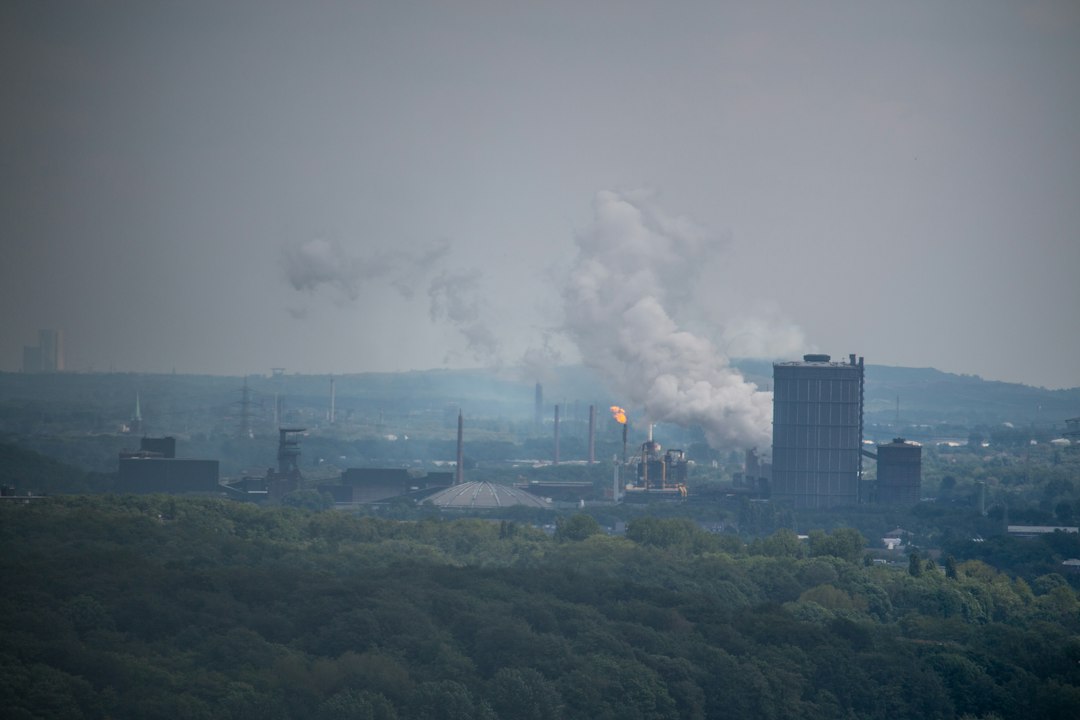
In 1945, Germany lay in ruins, but the Ruhr remained the continent’s most valuable industrial area. Its coal and steel works had been damaged, not erased. Whoever controlled the region would have influence over reconstruction, reparations and the future balance of power in western Europe.
The Soviet Union wanted a role in controlling the Ruhr and sought reparations from the centre of West German industry. France preferred to remove the region from Germany altogether or place it under international control. For Britain, which administered the surrounding occupation zone, either outcome threatened to put a strategic industrial centre beyond its direct authority.
There was also a practical problem. The British occupation zone contained a heavily bombed industrial population that could not feed itself. Britain needed to manage the Ruhr while preventing the territory from becoming an isolated prize that other powers could detach from its zone.
An Administrative Solution With Lasting Consequences
The British answer was to embed the Ruhr inside a large new state. In June 1945, the old Prussian Rhine Province was divided. Its southern section went to the French occupation zone, while the northern part became a new province called North Rhine. Westphalia, a more rural and traditionally conservative region, lay next to it.
On 21 June 1946, London approved the final plan. The codename was “Operation Marriage,” a fitting description of an arranged union between two partners who had not chosen one another. On 1 August, Rudolf Amelunxen, appointed—not elected—by the British authorities as minister-president, received the decision in writing: the new state would consist of the existing provinces of North Rhine and Westphalia, with Düsseldorf as its capital.
The founding was therefore announced by memorandum rather than celebration or referendum. On 23 August 1946, the founding ordinance took effect. The document was numbered 46, creating an almost too-perfect coincidence: a state born in 1946 through Ordinance No. 46.
A State Created Before It Had a Political Class
The first parliament met on 2 October 1946, but no electorate had chosen it. Every member had been appointed by the military government. Since the parliamentary building in Düsseldorf was still being cleared of wartime damage, the new legislature met in the city’s opera house.
That setting captured the strangeness of the moment: an appointed parliament, meeting in an opera house, representing a state that had not existed only weeks earlier. Düsseldorf’s selection as capital also reflected practical interests. British authorities had their coal administration there, while Cologne’s residents never entirely accepted the decision.
The British tightened their control over the economic foundation of the new state soon afterward. On 20 August, they took the iron and steel industry in their zone under direct control and placed the coal industry under their authority. The political map was being designed alongside an economic security system.
The One Partner That Negotiated
The marriage was not entirely a union of equals. In early 1947, the small territory of Lippe faced a choice between joining Lower Saxony or North Rhine-Westphalia. Its leaders negotiated rather than simply accepting an imposed arrangement. They secured concessions for the region and joined North Rhine-Westphalia through Military Ordinance No. 77 in January 1947.
Of the state’s three historical components, Lippe was the only one that entered voluntarily. Its place in the state’s identity is reflected in the coat of arms, alongside symbols representing the Rhine and Westphalia.
From Arranged Marriage to Shared Identity
The union initially had little emotional warmth. The Rhineland and Westphalia differed in religion, landscape and local culture. The Rhineland was associated with Catholic traditions and carnival, while Westphalia had a reputation for reserve and rural stubbornness. People across the state often identified first as Rhinelanders, Westphalians, Ruhr residents or Sauerlanders—not as North Rhine-Westphalians.
For decades, public campaigns tried to create a broader identity. The challenge was understandable: a political name does not automatically create a community. North Rhine-Westphalia had been designed on a map for strategic reasons, and its inhabitants still carried older regional identities.
Over time, however, the practical union produced results. Ruhr coal powered the reconstruction of West Germany and helped drive the economic miracle. Bonn, in North Rhine-Westphalia, served as the Federal Republic’s capital for four decades. The state later survived the decline of the very coal and steel industries that had made it strategically important, reinventing itself through universities, media, services and new industries.
An Ancient Horse on a Young State’s Shield
The coat of arms adds another layer to the state’s unusual history. Its three fields represent the Rhine, Lippe and Westphalia. The white rearing horse is the Saxon Steed, a symbol associated with the ancient Saxons and with Westphalia’s place in that older historical world.
The image is more than a decorative emblem. It is over a thousand years older than North Rhine-Westphalia itself, connecting a newly created political unit to one of the oldest identity symbols in German history. A state that began as an administrative solution carries an emblem rooted in medieval memory.
Are Made States Less Real?
North Rhine-Westphalia’s artificial beginnings raise a broader question: can a state created by decree become a genuine country within a federation?
The answer is yes—and the comparison with other German states makes the point clear. Bavaria was assembled from several cultural regions under Napoleonic reorganization. Baden-Württemberg emerged through a contested political settlement. Saxony’s name itself was transferred from one historical people and region to another. Borders are repeatedly made by inheritance, conquest, negotiation, legislation or administrative order.
North Rhine-Westphalia is not less real because its founding is recent or bureaucratic. It is simply unusually honest about how political geography works. Borders can be drawn by governments, but identity is built by time. The state began as a British solution to a post-war problem; it became, through shared prosperity, institutions and everyday life, a durable part of Germany.