The Forgotten Plan to Trade Bavaria for the Austrian Netherlands
In the late eighteenth century, European rulers treated territories as pieces on a dynastic chessboard. Borders could be traded, inherited, or rearranged without the consent of the people who lived within them. Few proposed bargains were stranger than the plan to exchange Bavaria for the Austrian Netherlands—the region that broadly corresponds to modern Belgium.
The scheme was discussed twice. The first attempt nearly triggered a major European war. The second relied on marriage, inheritance, and a dying elector’s signature. Both failed, leaving Bavaria in place and giving Europe one of its most revealing stories about power, family, and political geography.
A New Elector Arrives in Bavaria

The crisis began in December 1777, when Maximilian III Joseph, the last elector of the senior Bavarian Wittelsbach line, died without children. His death ended a succession that had governed Bavaria for more than four centuries. The inheritance passed to a distant relative: Charles Theodore, Elector Palatine.
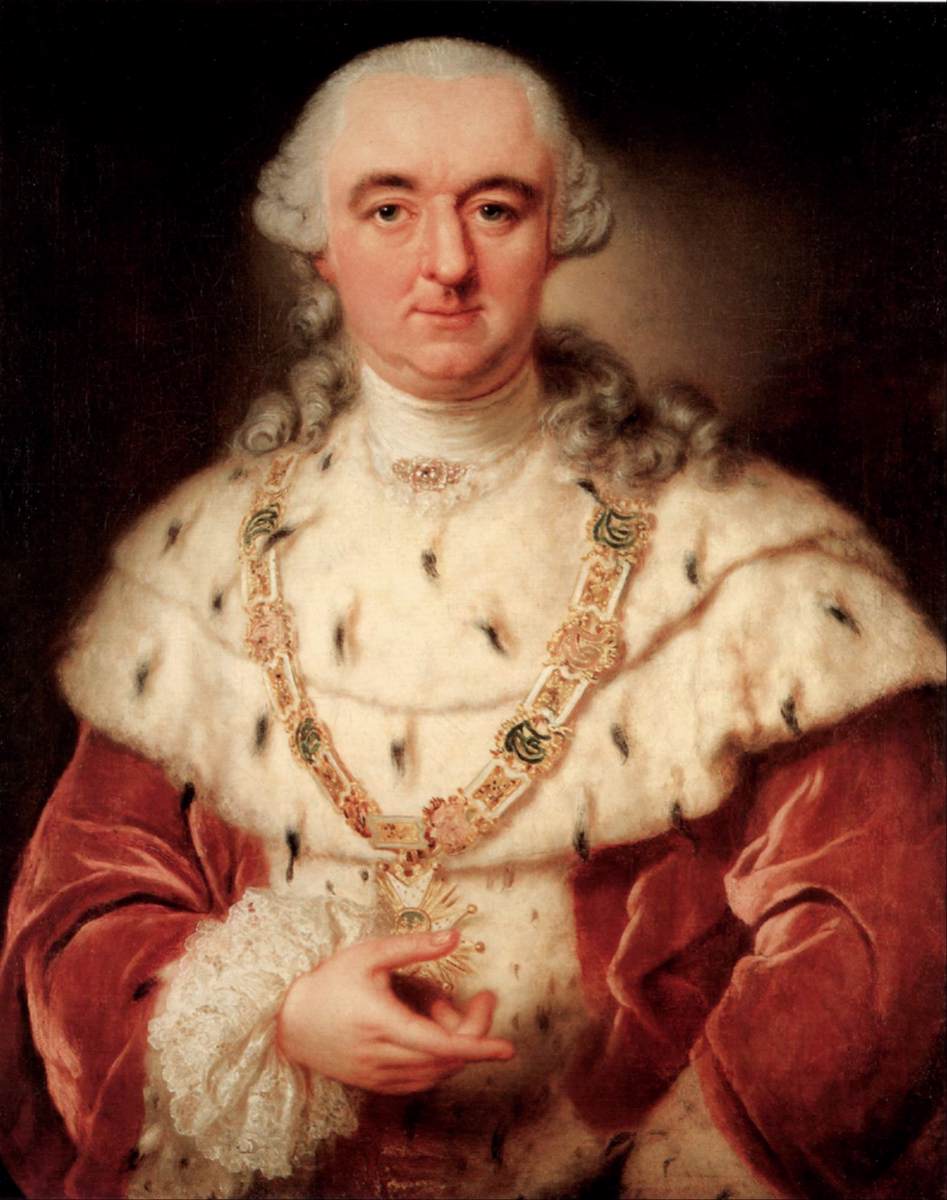
Charles Theodore had spent most of his life on the Rhine, ruling from Mannheim. He had transformed that city into a major center of music, theater, architecture, and intellectual life. Munich, by contrast, was unfamiliar to him, and the move south offered little attraction. His existing possessions were already scattered across the map, including the Palatinate, Jülich and Berg, and other territories spread across western and central Germany. Bavaria added another large but geographically separate block to an already fragmented collection of lands.
Charles Theodore had another personal connection to the west. He had been born near Brussels, in the Austrian Netherlands. The territory he would later consider exchanging for Bavaria was connected to his own origins and would have fitted far more naturally with his western possessions.
Austria Makes Its First Move
Vienna quickly saw an opportunity. Emperor Joseph II had lost Silesia to Prussia and wanted compensation. Bavaria was wealthy, Catholic, and strategically placed on Austria’s frontier. Its succession was also vulnerable, since Charles Theodore had inherited the country without being rooted there.
Only days after taking over the Bavarian inheritance, Charles Theodore agreed to surrender Lower Bavaria and additional districts to Austria. The arrangement was legally questionable but backed by Austrian military strength. If completed, it would have substantially expanded Habsburg power in southern Germany.
Prussia could not accept that outcome. Frederick the Great feared that an enlarged Austria would dominate the German states, and he found a convenient ally in Charles Theodore’s own family. The elector had no legitimate children, so the succession was expected to pass to Charles II August of Zweibrücken. Charles August opposed the territorial concessions and appealed to Frederick for support.
The War Without a Battle
In July 1778, Prussian forces entered Bohemia, beginning the War of the Bavarian Succession. It became one of the eighteenth century’s most unusual conflicts. The opposing armies struggled with supply, maneuvered cautiously, and never fought the decisive battle everyone expected.
Instead, soldiers spent much of the campaign taking provisions from one another and digging potatoes from Bohemian fields. The conflict became known as the Potato War, a name that captures both its logistical character and its anticlimactic reputation.
The Treaty of Teschen ended the war in May 1779. Bavaria remained largely intact. Austria received the Innviertel, a relatively small region around Braunau. That settlement preserved the Bavarian state and established a frontier whose outline still matters today.
The Grand Exchange Proposed Again

Austria did not abandon the idea. New negotiations began in 1784, and this time the proposed transaction was much larger. Charles Theodore would surrender the entire Electorate of Bavaria and receive the Austrian Netherlands in return. Joseph II would also grant him a royal title connected with the medieval idea of Burgundy.
From Charles Theodore’s perspective, the offer had a clear attraction. His western territories were scattered across the Rhine and the Low Countries, while Bavaria lay far to the east. The Austrian Netherlands would have connected his possessions into a powerful western bloc with residences at Mannheim, Düsseldorf, and Brussels. The combined state could have generated greater revenues than Bavaria and offered the elector the prestige of kingship.
For the people of Bavaria, however, the proposal was a sale of their country by a ruler who had barely formed a connection with it. Opposition gathered around Maria Anna, the widow of the previous elector, and other Bavarian patriots. Charles August of Zweibrücken again turned to Prussia.
Frederick’s Last Great Diplomatic Victory
This time Frederick the Great did not send an army. In July 1785, he organized the Fürstenbund, or League of Princes, a coalition of German rulers opposed to the emperor’s expansion. The alliance demonstrated that Austria could not reshape the political map without confronting coordinated resistance from other states.
Austria withdrew the proposal, and Bavaria remained Bavarian. Charles Theodore eventually had to accept Munich as his political center. His reign there was not without lasting achievements. In 1789, he ordered land along the Isar to be converted into a public park for the benefit of the entire population. That project became the English Garden, one of Europe’s earliest great public parks.
A Marriage Intended to Control the Succession
Vienna tried a different strategy after Charles Theodore’s wife died in 1794. He was seventy years old and still had no legitimate heir. The Habsburg court arranged a marriage with Maria Leopoldine of Austria-Este, an eighteen-year-old granddaughter of Maria Theresa.
The political calculation was straightforward: if the marriage produced a son with Habsburg connections, Bavaria might eventually pass into Austria’s orbit through inheritance. But Maria Leopoldine did not behave as a compliant instrument of dynastic policy. The marriage remained childless, and the succession plan collapsed.
When Charles Theodore suffered a stroke in February 1799, an Austrian envoy attempted to reach his deathbed with documents that might secure territorial concessions or favorable testamentary clauses. Maria Leopoldine blocked the way. At only twenty-two, she prevented the imperial court from making one last attempt to take control of Bavaria.
What Charles Theodore Nearly Lost
Charles Theodore died four days after his stroke. The succession passed to the Zweibrücken line, and Maximilian Joseph eventually became the first king of Bavaria. The country survived the schemes that had threatened to transfer it to Austria.
Events soon showed how dangerous the exchange would have been for Charles Theodore. In 1789, rebellion broke out in the Austrian Netherlands against Joseph II’s reforms. The territory declared independence, then faced French intervention. Austria lost the region permanently in the 1790s and ceded it to France in 1797.
Had the bargain succeeded in 1785, Charles Theodore might have become king of a new western realm only to lose that realm within a decade. Bavaria would have disappeared from the map as an independent political center, while the land he received in return would have been swept away by revolution and war.
The episode reveals the limits of dynastic power. A ruler could propose to trade a country, but he could not guarantee that another dynasty, a hostile population, or the upheavals of Europe would honor the deal. Bavaria survived because rival princes resisted Austria, because diplomacy replaced war, and finally because a young bride refused to let her family’s imperial ambitions decide the future of an entire state.