Cyprus at a Crossroads: Can a New Political Opening End the Island’s Division?
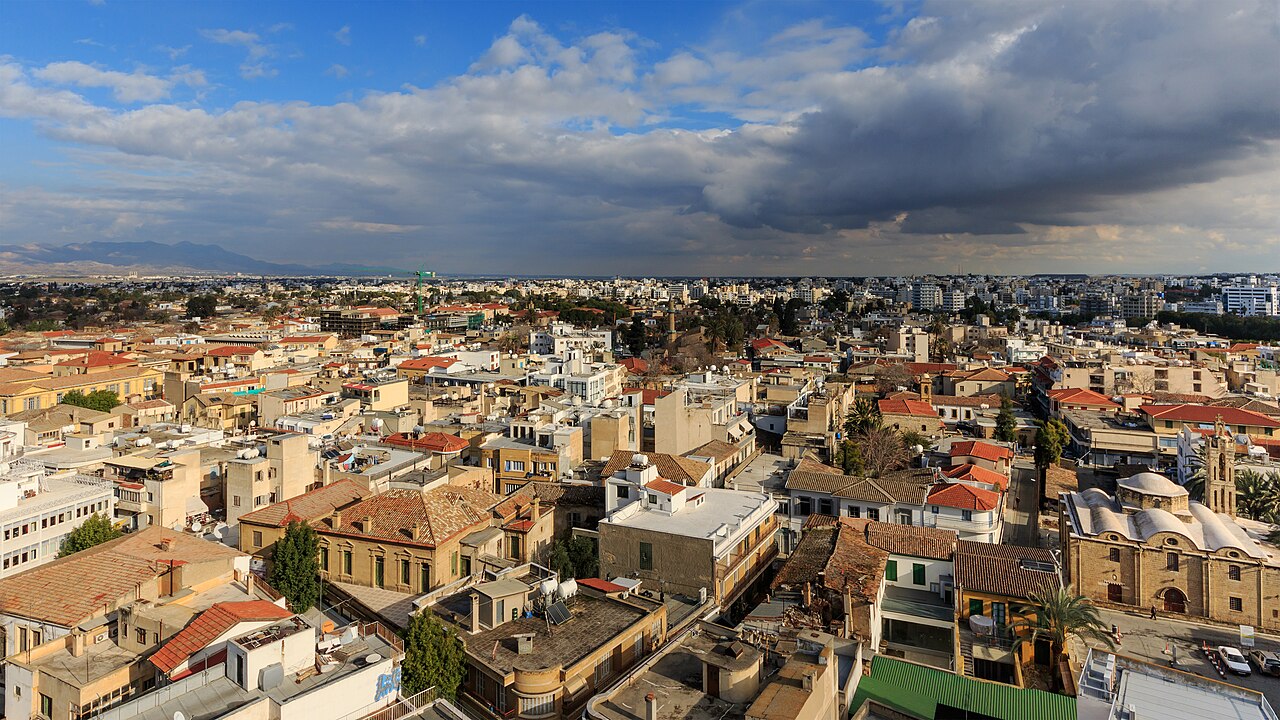
Cyprus remains one of Europe’s most enduring political fault lines. In the heart of the European Union, the capital Nicosia is still divided by checkpoints, barbed wire and a United Nations-patrolled buffer zone. More than five decades after the island’s partition, a fresh diplomatic opening is raising the possibility of renewed negotiations.
A divided island at the centre of Europe
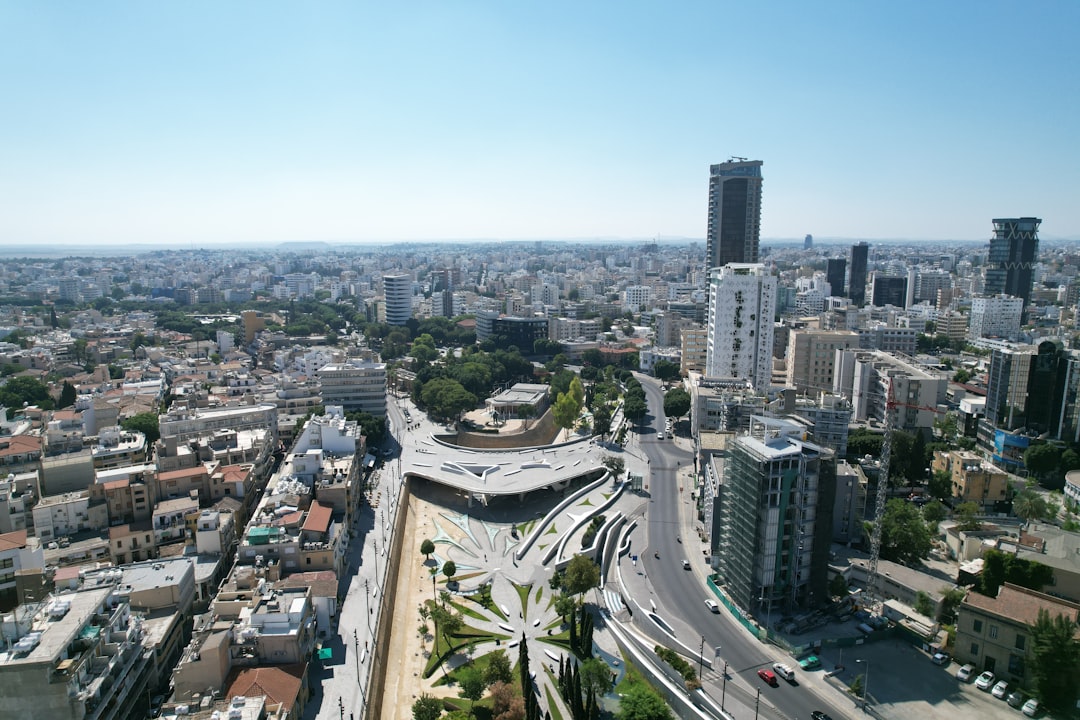
The modern Republic of Cyprus became independent from British rule in 1960. Its constitutional system was designed to share power between Greek Cypriots and Turkish Cypriots, while Greece, Turkey and the United Kingdom became guarantor powers. Britain also retained two sovereign military bases.
The power-sharing arrangement began to collapse in 1963 as political disagreements and intercommunal violence intensified. United Nations peacekeepers arrived the following year. The decisive rupture came in 1974, when supporters of union with Greece carried out a coup against the Cypriot government with backing from Greece’s military regime. Turkey then intervened in the north.
The result was a ceasefire line stretching roughly 180 kilometres across the island. The internationally recognised Republic of Cyprus controls the south, while the Turkish Republic of Northern Cyprus administers the north and is recognised only by Turkey. Nicosia remains the last divided capital in the European Union.
Why earlier reunification efforts failed
Cyprus came close to reunification in 2004, when a United Nations plan proposed a new federal state. The plan was put to separate referendums in the two communities. It received support from about 65 percent of Turkish Cypriot voters but was rejected by approximately 76 percent of Greek Cypriot voters.
Opposition in the south centred on concerns about security guarantees, property rights, the political structure of the proposed federation and the continued presence of foreign troops. Despite the failed referendum, the Republic of Cyprus joined the European Union one week later. EU law applies across the island in principle, but its application remains suspended in the north.
Another major attempt collapsed at Crans-Montana in 2017. The most difficult issues included the role of Turkish forces, intervention rights for the guarantor powers and the precise meaning of political equality between the two communities. After that failure, the peace process largely stagnated for years.
A new opening in the north
The political landscape shifted after the Turkish Cypriot leadership election in October 2025. Tufan Erhürman won with a strong mandate after campaigning in favour of returning to negotiations on a bi-zonal, bi-communal federation. His predecessor had promoted a two-state solution in close alignment with Ankara.
Erhürman’s position does not eliminate the differences between the two sides. He has stressed that any settlement must provide meaningful political equality for Turkish Cypriots and avoid another open-ended process without clear rules. Nevertheless, his election has restored support in the north for the framework that the United Nations has traditionally backed.
In July 2026, United Nations Secretary-General António Guterres met the leaders of both communities in Cyprus. The meetings were followed by a joint gathering in the UN-controlled buffer zone and a proposal for a new 5+1 format involving the two Cypriot sides, Greece, Turkey, the United Kingdom and the United Nations. The initiative offers the first concrete diplomatic channel back to formal talks in nearly a decade.
Small practical steps could rebuild trust
The immediate agenda is not reunification but confidence-building. Proposed or discussed measures include making it easier for Turkish Cypriot products such as halloumi to reach European markets, speeding up crossings, expanding the number of checkpoints and advancing a water project that could supply farmers in the south from northern infrastructure.
Other ideas include cooperation on demining, youth exchanges, solar power in the buffer zone and the restoration of cemeteries. These projects are modest compared with a peace treaty, but they could make cooperation visible in everyday life and reduce the political cost of further talks.
What a federal Cyprus could look like
The leading UN-backed model is a bi-zonal, bi-communal federation. Under such an arrangement, neither side would simply absorb the other. A single Cypriot federal state would combine joint representation at the central level with broad self-government for both communities.
The current ceasefire line would lose its role as a military separation zone, and EU law could gradually be applied fully in the north. That would offer Turkish Cypriots greater access to international trade, travel and investment. A settlement would also need to address displaced people’s property claims, territorial adjustments, return or compensation, the operation of federal institutions and the future security system.
Turkey remains the decisive obstacle
The biggest uncertainty is Turkey’s official support for a two-state solution and its continued backing for the recognition of Northern Cyprus. Ankara has substantial economic and security influence in the north, where Turkish troops remain stationed. Many Turkish Cypriots view that presence as a protection against renewed conflict, while many Greek Cypriots see it as incompatible with a sovereign reunified state.
Any agreement would therefore need to satisfy not only the two communities but also Greece, Turkey and the United Kingdom. The 5+1 concept reflects the reality that Cyprus cannot resolve its security architecture in isolation from the guarantor powers.
Why the timing matters
A settlement would have consequences beyond the island. The Cyprus dispute has strained relations between two NATO members, Greece and Turkey, and complicated Turkey’s relationship with the European Union. Offshore gas resources have repeatedly become entangled in territorial disputes, while energy and electricity links involving Greece, Cyprus and potentially Israel remain difficult to develop without greater regional stability.
Cyprus is also close to several Middle Eastern conflict zones. For the European Union, a united member state without a frozen conflict would be a strategic gain. For Turkey, a settlement could eventually create new economic and political opportunities with Europe.
The realistic next step
The most plausible near-term outcome is the reopening of structured negotiations, not an immediate reunification. If the two sides expand crossings, deliver joint projects and reconnect infrastructure, the buffer zone could gradually become less politically significant. If the talks fail, however, the two-state approach may become more entrenched.
The new political leadership in the north has created an opportunity, but not a guarantee. The core disputes—security, troops, property, territorial arrangements and political equality—remain formidable. Cyprus may be closer to a negotiating table than it has been in years, yet turning that opening into a durable settlement will require sustained commitment from the island’s communities and the powers that still shape its future.