Why Eastern Turkey Is Losing Its People
Eastern Turkey is the country’s largest and least densely populated region. It covers roughly 163,000 square kilometres—nearly half the size of Germany—but is home to only about 6.5 million people. That contrast is becoming more striking every year: while Turkey’s population continues to grow overall, many eastern provinces continue to lose residents.
A Vast Region with Very Few People

The population gap between western and eastern Turkey is extraordinary. Istanbul has nearly 3,000 residents per square kilometre, while Tunceli has only around 11. Turkey’s national average is approximately 114 people per square kilometre, placing the eastern provinces far below the country as a whole.
The three least populous provinces in Turkey—Bayburt, Tunceli, and Ardahan—are all in the east. Each has fewer than 100,000 residents, a figure smaller than the population of many individual Istanbul neighbourhoods. Some districts of the country’s largest city contain several times as many people as an entire eastern province.
Ongoing migration has also changed the character of rural communities. Villages that appear lively in summer may be sustained by families returning temporarily from Istanbul, Izmir, western Turkey, or Germany. For much of the year, many houses are occupied only intermittently, if at all.
The Mountains Are Not the Whole Explanation
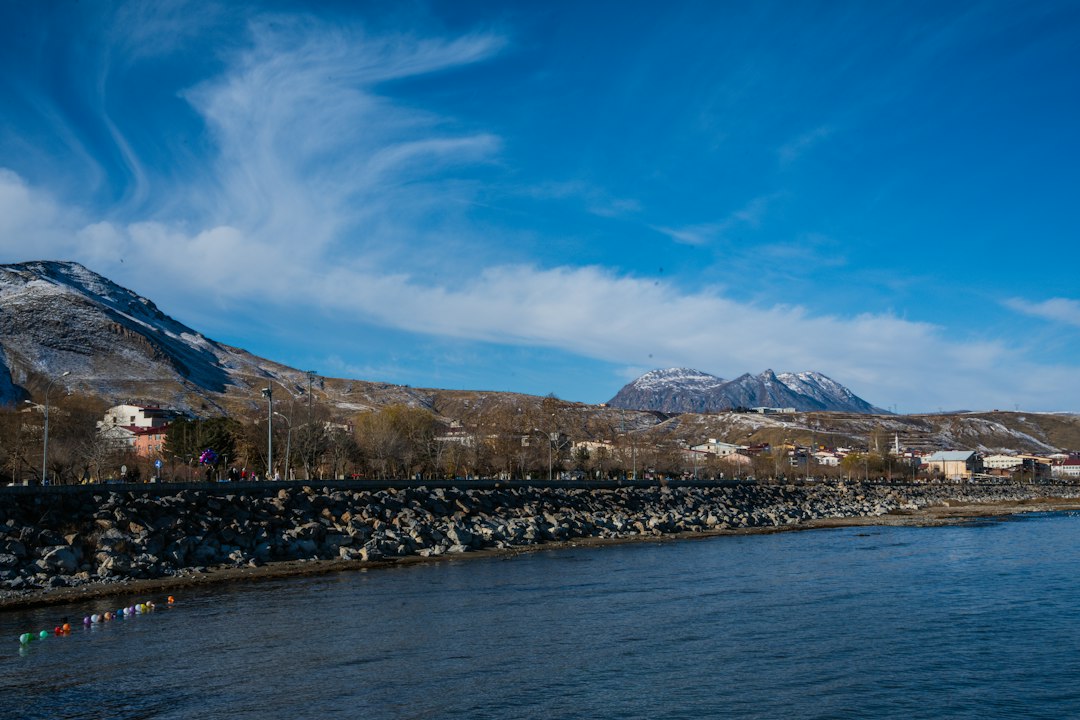
Eastern Anatolia is often described as Turkey’s roof. Its high plateaus commonly sit around 2,000 metres above sea level, and several cities stand at elevations approaching 1,800 metres. Mount Ararat rises to 5,137 metres, while Erzurum is widely regarded as one of the country’s coldest major cities.
Winters can be severe. January temperatures in Erzurum average around -10°C, and nights below -30°C are not unusual. In the coldest periods, temperatures can fall even lower. Snow and frozen water are part of everyday life in a way they are not for communities on the Mediterranean coast.
Yet climate alone cannot explain the region’s depopulation. These mountains were inhabited for thousands of years. The ancient kingdom of Urartu flourished here, and Ani became a major medieval city and trading centre. The landscape has not suddenly become colder or steeper. What changed was the economic and political environment surrounding it.
Economic Opportunity Is Concentrated in the West
Turkey’s economy is heavily concentrated in its western cities. Istanbul, Ankara, Izmir, Bursa, Antalya, and Adana account for a disproportionately large share of national economic activity. They offer universities, industrial jobs, service-sector careers, transport connections, and wider professional networks.
Eastern provinces have far less industry. Long winters, difficult terrain, and distance from major markets make large-scale investment more difficult. Agriculture and livestock remain important, especially on the region’s broad grazing lands, but these sectors do not provide enough stable, well-paid work for a rapidly changing population.
This creates a self-reinforcing cycle. Businesses are reluctant to invest where there are fewer consumers and workers, while young people are reluctant to remain where there are few businesses. The east is not empty simply because it is poor; it has become emptier because poverty and limited opportunity persisted for so long.
For a young person in Ardahan or another remote province, the choice can be stark: remain near home with limited employment options or move to a city where jobs, education, and services are concentrated. Millions have chosen to leave.
Roads Connected Villages—and Made Leaving Easier
During the second half of the twentieth century, the Turkish state built roads into remote mountain villages. The goal was to improve access to healthcare, education, supplies, and markets. In many respects, better connections did bring important benefits.
They also changed migration. Before the road network expanded, Istanbul could feel impossibly distant. Once a reliable bus journey connected a village to the country’s biggest city, moving away became far more practical. Infrastructure that was intended to support rural life also gave residents a direct route out of it.
The result was not a single dramatic exodus, but decades of movement from villages to regional towns and then toward western metropolitan areas. Family networks made the process easier: one person moved first, found work, and later helped relatives follow.
Migration Continued Beyond Turkey
The population loss did not stop at Turkey’s western coast. Many Turkish workers who migrated to Germany from the 1960s onward came from Anatolian villages, including communities in the east. Berlin, Cologne, and the Ruhr region became part of the same family geography as villages thousands of kilometres away.
Remittances and returning visitors can support local households, but they do not necessarily restore permanent population. A village may receive money, renovations, and summer visitors while still losing the young adults who would otherwise form its workforce and raise the next generation there.
Conflict Accelerated an Existing Pattern
There is also a political and human dimension that cannot be separated from the economic story. Large parts of eastern and southeastern Anatolia are predominantly Kurdish. During the 1980s and 1990s, the region became the centre of an armed conflict between the Turkish state and the Kurdistan Workers’ Party, or PKK.
Thousands of villages were evacuated or destroyed during the conflict, and hundreds of thousands of people were displaced. Many moved to nearby towns; others went to western Turkey or abroad. Whatever one’s political interpretation of the conflict, its demographic effect is clear: it accelerated a rural-to-urban migration that economic pressures had already begun.
Economic centralisation, new roads, and conflict therefore worked together. Each force had a different origin, but all reduced the number of people able or willing to remain in many eastern communities.
A Young Population That Is Still Shrinking
The demographic paradox is perhaps the most revealing part of the story. Turkey’s total fertility rate fell to about 1.48 children per woman in 2024, well below the replacement level of roughly 2.1. Eastern and southeastern provinces, however, continue to record much higher birth rates. In parts of the region, the figure is above three children per woman, and women often have their first child several years earlier than the national average.
Eastern Turkey is therefore younger and more fertile than much of the country, yet many of its provinces continue to shrink. The explanation is net migration. More people leave than are added through births. Children may be born in the east, but the employment and education system often encourages them to become adults elsewhere.
This pattern can be seen in provinces such as Kars, which has fallen dramatically in the national population rankings over recent decades. The country as a whole has grown from around 50 million people in 1985 to approximately 86 million today, while numerous eastern provinces have declined year after year.
Could the Direction Change?
The flow is not necessarily permanent. Istanbul is increasingly expensive, crowded, and difficult for families on ordinary incomes. Housing costs have surged, traffic and noise are constant, and a salary that once supported a household may no longer cover a comfortable home.
These pressures are prompting some older residents who spent years abroad and some younger families to reconsider eastern towns. Cleaner air, lower housing costs, family connections, and a quieter lifestyle can be attractive—especially when remote work or online business makes location less decisive.
Reversing depopulation would require more than nostalgia. Reliable healthcare and schools, digital connectivity, year-round employment, transport, and investment adapted to the region’s climate would all matter. But the same roads and communications that once enabled people to leave could now help people return, provided there are good reasons to stay.
Eastern Turkey’s future will depend on whether the region can turn its geography from a barrier into an asset. Its mountains, history, open land, and strong family networks remain. The central question is whether they can be matched with enough opportunity for the people born there to build their lives there as well.