The Kuril Islands Dispute: Why Russia Is Unlikely to Return Japan’s Northern Territories
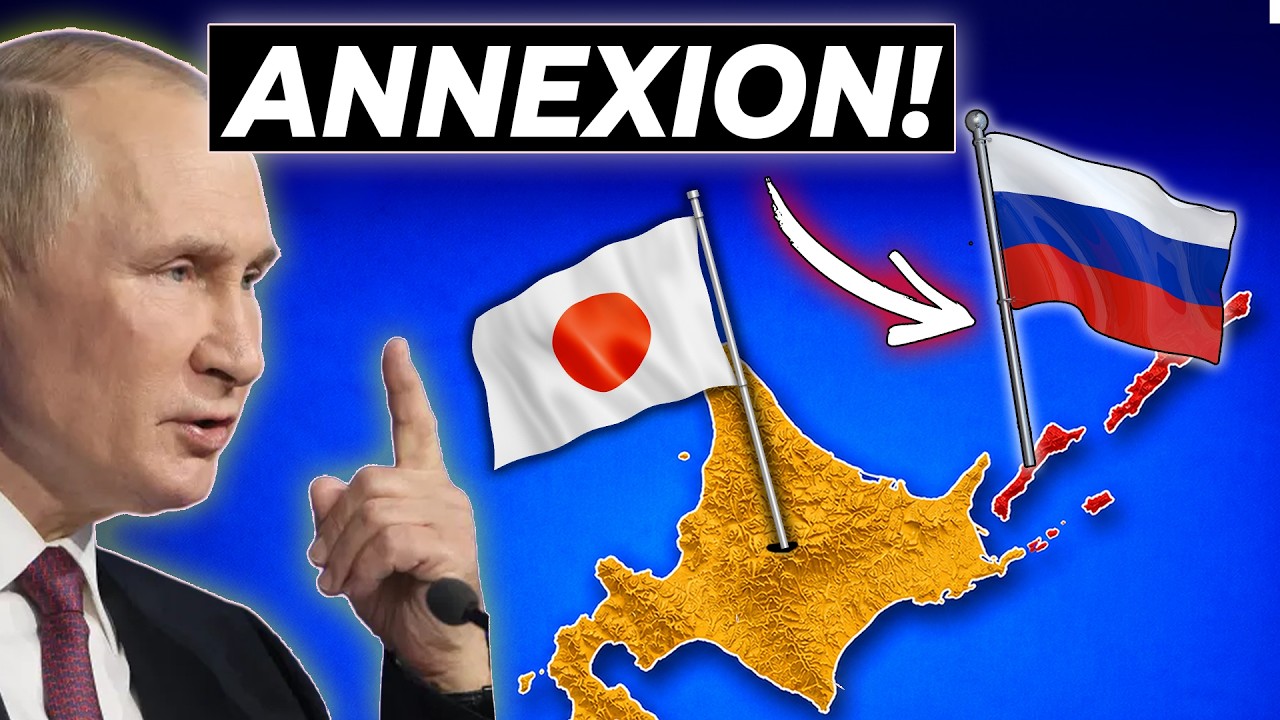
More than eight decades after the end of the Second World War, Russia and Japan still have no comprehensive peace treaty. The central obstacle is a dispute over four islands at the southern end of the Kuril chain: Iturup, Kunashir, Shikotan and the Habomai island group. Russia has controlled them since 1945, while Japan continues to claim them as its own territory.
The disagreement is not simply about remote land. The islands sit beside strategically important waters and sea passages, and their status is tied to Russia’s nuclear deterrent, Japan’s security alliance with the United States and the unresolved legal consequences of the Second World War.
A border dispute with 19th-century roots
The modern dispute began with the 1855 Treaty of Shimoda, which established the first formal boundary between the Russian Empire and Japan. The border ran between Iturup and Urup, leaving Iturup, Kunashir, Shikotan and Habomai on the Japanese side. The islands farther north belonged to Russia, while Sakhalin remained divided between the two powers.
In 1875, the two countries reached another agreement. Japan abandoned its claims to Sakhalin, and Russia transferred the northern Kuril Islands to Japan. From that point until the Second World War, Japan controlled the entire Kuril chain, while Sakhalin became wholly Russian.
The Soviet takeover in 1945
The islands changed hands at the end of the war. At the Yalta Conference in February 1945, the United States and Britain promised the Soviet Union control of the Kurils in return for Moscow joining the war against Japan after Germany’s defeat.
The Soviet offensive in the Far East began on August 9, 1945. Japan announced its acceptance of the surrender terms on August 15, but Soviet forces continued their advance. Between August 28 and September 5, they occupied the Kuril chain, including the four southern island groups claimed by Japan. Approximately 17,000 Japanese residents lived in those territories at the time.
Russia therefore regards the islands as territory acquired as a result of the Second World War. Japan disputes that interpretation, arguing that the four southern territories are not part of the Kuril Islands that it renounced after the war.
Why the legal question remains unsettled
The 1951 Treaty of San Francisco complicated the issue rather than resolving it. Japan renounced its claims to the Kuril Islands and the southern part of Sakhalin, but the treaty did not clearly assign those territories to another state. The Soviet Union did not sign the agreement, leaving room for competing interpretations.
Tokyo maintains that the four disputed territories were historically Japanese and were excluded from the areas covered by its renunciation. Moscow rejects that distinction and considers all four islands part of the southern Kurils, transferred to Soviet control after the war.
Both sides can therefore point to different agreements and definitions. That legal ambiguity has allowed the dispute to survive even though the broader state of war between the two countries ended in 1956.
The 1956 compromise that nearly opened a path to peace
The 1956 Soviet-Japanese Joint Declaration restored diplomatic relations and formally ended the wartime state of conflict. It also offered a possible basis for a peace settlement: the Soviet Union said it would transfer Shikotan and Habomai to Japan after a peace treaty was concluded.
Iturup and Kunashir, however, would remain under Soviet control. Although the proposal involved two of the four disputed areas, Shikotan and Habomai together represented only about 7 percent of the total disputed land. Japan therefore continued to demand all four territories rather than accept a settlement involving only the smaller islands.
The political environment soon made even that limited offer more difficult. After Japan renewed its security treaty with the United States in 1960, Moscow linked any transfer to the departure of foreign troops from Japan. The possibility of an agreement effectively stalled.
Diplomacy returned, then collapsed again
The issue briefly regained momentum during the years of Japanese Prime Minister Shinzo Abe. Abe met Russian President Vladimir Putin repeatedly and sought to combine economic cooperation with personal diplomacy. In 2018, both governments agreed to accelerate peace talks on the basis of the 1956 declaration.
Important questions remained unanswered. If the two smaller islands were transferred, would Japan continue claiming Iturup and Kunashir? Could American forces or military facilities be placed on the returned territories? Would Russia lose strategically important access points in the Pacific?
Russia’s full-scale invasion of Ukraine in 2022 ended the diplomatic opening. Japan joined Western sanctions, and Moscow suspended peace negotiations, halted joint economic projects and ended visa-free visits for former Japanese residents of the islands. A difficult territorial dispute became part of a much broader geopolitical confrontation.
The islands’ military importance
The strongest reason Russia is unlikely to surrender Iturup or Kunashir is strategic rather than historical. The waters around the Kurils connect the Sea of Okhotsk with the open Pacific. The Sea of Okhotsk is also an important operating area for Russian ballistic-missile submarines, which form a central part of Moscow’s nuclear deterrent.
These submarines are intended to preserve Russia’s ability to launch a retaliatory strike even after suffering a devastating attack. To protect them, Russia has developed what is often described as a “bastion” strategy. Warships, aircraft, submarines, coastal missiles and surveillance systems work together to discourage American or Japanese forces from entering the area and tracking the missile submarines.
The Kuril Islands form the outer defensive barrier of this system. Control of the islands provides influence over several passages between the Sea of Okhotsk and the Pacific. Iturup and Kunashir are especially significant because of their positions near strategically important routes.
Russia has reinforced its presence on the islands with troops, tanks, artillery, multiple-launch rocket systems and reconnaissance drones. From Moscow’s perspective, returning the two larger islands would not be comparable to giving up isolated pieces of territory. It would give a close US ally access to an area Russia views as a shield for its nuclear forces.
A settlement that is increasingly out of reach
The dispute combines competing historical narratives, unresolved treaty language and current military realities. Japan sees the four territories as unlawfully occupied parts of its own country and continues to demand their return. Russia treats the islands as legitimate wartime acquisitions and a vital component of its Pacific defenses.
The 1956 formula still exists on paper, but the circumstances that once made it conceivable have changed radically. Relations between Moscow and Tokyo are now shaped by sanctions, military competition and the wider confrontation between Russia and the United States. As long as Russia believes the islands help protect its strategic submarines, a return of Iturup and Kunashir is highly unlikely.
That leaves the dispute without an obvious compromise. The smaller islands may once have offered a possible route to a peace treaty, but neither side currently appears ready to accept the political and security risks involved. The result is a territorial conflict that began in the aftermath of the Second World War and remains embedded in the security architecture of the modern Pacific.