Who Controls the Strait of Hormuz? Law, Power, and the Global Oil Route
The Strait of Hormuz sits at the intersection of geography, international law, military power, and the global energy economy. At its narrowest point, the waterway is only about 34 kilometers wide, yet it connects the Persian Gulf with the open waters of the Indian Ocean. Much of the world’s oil and liquefied natural gas passes through this confined maritime corridor.
That strategic importance has produced a fundamental dispute over who controls the strait. Iran asserts authority over the northern side, while Oman administers the waters around the Musandam Peninsula to the south. The United States, meanwhile, has used naval power to keep shipping lanes open and deter attacks. Those competing forms of authority are often described as “control,” but they are not the same as ownership or sovereignty.
A Narrow Passage With Global Consequences
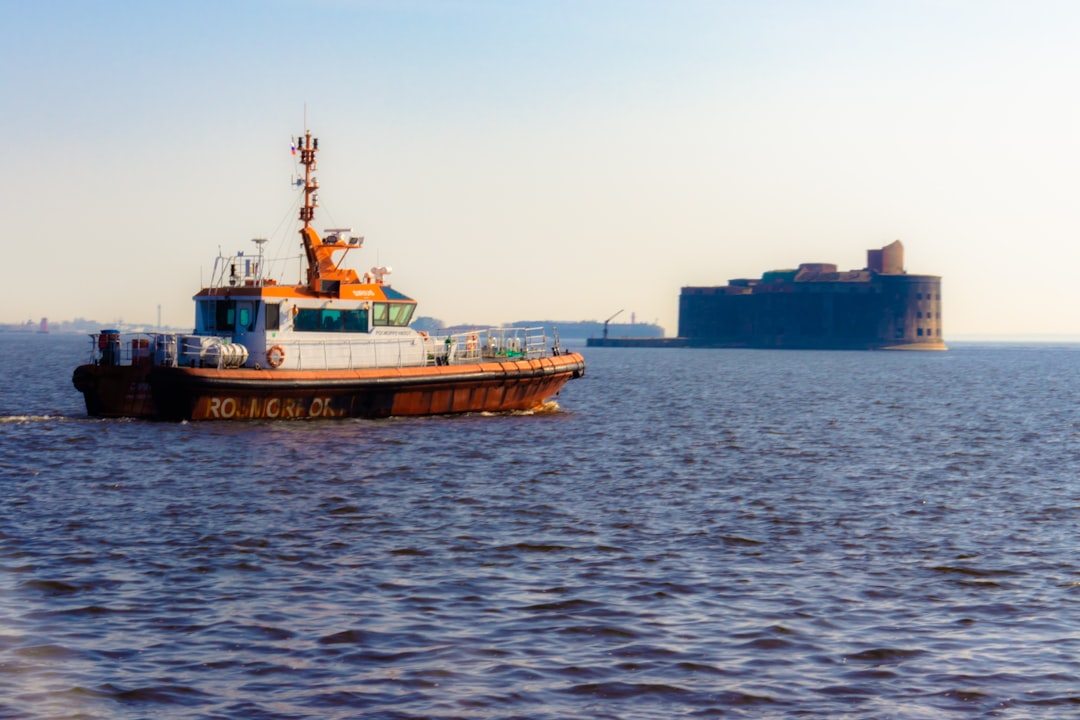
The Strait of Hormuz is the only sea route linking the Persian Gulf to the wider Indian Ocean. Its geography makes it unusually vulnerable to disruption. Tankers cannot use the entire width of the strait freely: established traffic-separation arrangements compress commercial shipping into a much narrower corridor, roughly 11 kilometers across in total.
Iranian islands, including Qeshm, Larak, and Hormuz, dominate the northern approaches. Oman’s Musandam exclave projects into the southern side. Because both Iran and Oman have territorial waters along the passage, ships are not traveling through a conventional belt of unclaimed international sea. They are moving through the coastal waters of two sovereign states.
That fact gives Tehran and Muscat important responsibilities, but it does not give either government unlimited discretion. The strait has been used by international shipping for centuries, and its role as a global maritime artery places it under a special legal regime.
What International Maritime Law Allows
Under the United Nations Convention on the Law of the Sea, coastal states generally exercise sovereignty over their territorial seas. Iran therefore has sovereignty over its territorial waters, and Oman has sovereignty over its own. At the same time, international straits used for navigation between one part of the high seas or an exclusive economic zone and another are subject to the right of transit passage.
Transit passage allows ships and aircraft of all states to move through an international strait continuously and expeditiously. Vessels must follow navigation and safety rules, and coastal states can regulate traffic, respond to environmental threats, and address immediate dangers. They cannot, however, suspend transit passage at will or turn it into a discriminatory privilege reserved for political allies.
The result is a legal compromise. Iran and Oman possess sovereignty over their respective waters, while the international community possesses a protected right of passage. The United States benefits from that right just as other maritime powers do. But the right to sail through the strait does not transfer ownership of the waterway to Washington.
Military Control Is Not Territorial Sovereignty
A naval force can shape events without acquiring territory. American warships can escort tankers, clear mines, protect commercial traffic, and deter attacks by armed boats. If those operations are effective, the United States may exercise decisive practical influence over who can pass safely.
That influence is still different from sovereignty. A state does not acquire another country’s territory simply because its military can enforce access there. A presidential declaration cannot redraw the coastlines of Iran or Oman. Any lawful transfer of territory would require the consent of the states concerned and an international agreement. Taking territory by force would also collide with the core prohibition on using force against the territorial integrity or political independence of another state.
Even a permanent American naval presence would not change that legal reality. Escorts and patrols could make the United States the most powerful actor in the strait, but the waters would remain Iranian and Omani territorial seas subject to the international right of transit passage.
Why Washington Claims a Special Stake
America’s involvement in the Persian Gulf has deep roots. As the region became central to the energy security of Western economies after the Second World War, the United States gradually assumed a larger role as the external security guarantor of Gulf shipping.
The Carter Doctrine, announced in 1980, formalized the view that outside attempts to dominate the Persian Gulf would be treated as a vital American interest. During the Iran-Iraq War, attacks on merchant vessels and oil tankers led the United States to escort reflagged commercial ships. In 1988, after the frigate USS Samuel B. Roberts struck an Iranian mine, the United States launched Operation Praying Mantis against Iranian naval and military targets.
The headquarters of the U.S. Fifth Fleet has also been based in Bahrain since the mid-1990s. These policies established a long-standing American security role, but previous administrations generally stopped short of claiming the waterway itself as American territory. The distinction between defending access and possessing land or sea has remained important.
Two Competing Systems of Enforcement
Recent tensions have created overlapping and sometimes contradictory systems of control. Washington has demanded open, unconditional passage and expanded sanctions against Iranian ships, companies, and financial networks. Tehran has insisted that passage remains restricted while sanctions, port blockades, and military threats continue.
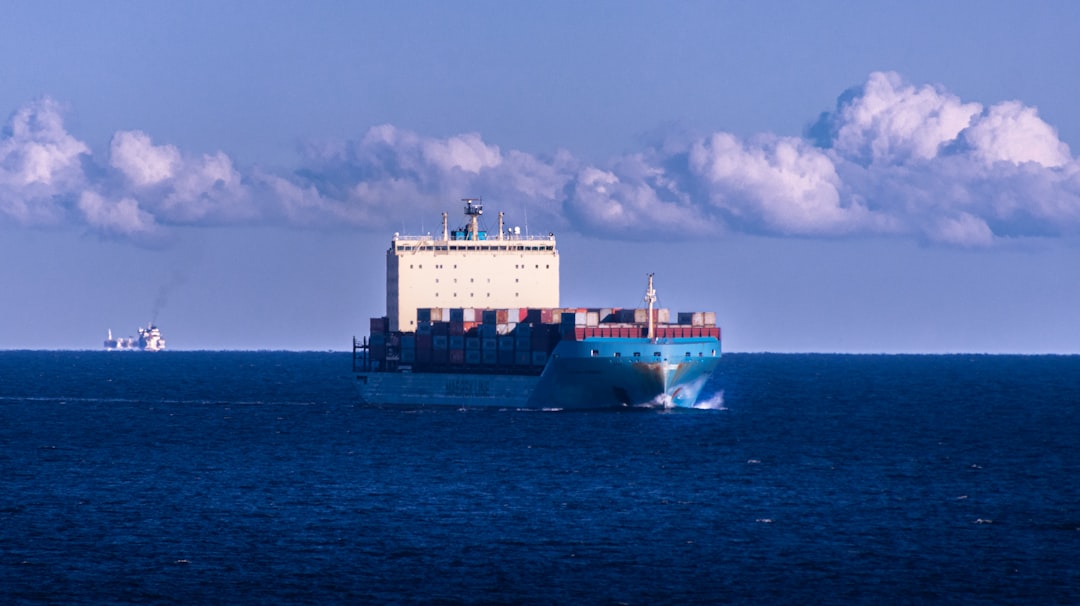
Commercial consequences are immediate. Before the conflict, approximately 130 to 140 merchant ships reportedly crossed the strait each day. During periods of heightened tension, traffic fell to only a fraction of that level, while some very large crude-oil tankers and liquefied-natural-gas carriers stayed away altogether.
Iran has also threatened penalties, detention, or cargo seizure for vessels it considers non-compliant. The United States, in turn, has used sanctions and naval pressure to influence the behavior of shipping companies and governments. Both sides can therefore exercise meaningful power, but neither possesses the waterway alone.
Iran and Oman’s Alternative
Iran and Oman have explored a system that would give the two coastal states a greater role in managing traffic. One possible arrangement would direct more inbound vessels through Iranian waters, allow Tehran to inspect or screen certain ships entering the Persian Gulf, and assign Oman responsibility for part of the outbound flow.
Iran’s argument is straightforward: the coastal states are the parties with territorial jurisdiction and should set the rules. The concern in Washington and among shipping interests is that such a system could become a political instrument. Vessels could be treated differently based on their flag, cargo, or country of origin, making supposedly guaranteed passage dependent on prior approval.
International maritime principles provide little support for politically motivated transit fees or discriminatory restrictions. Any workable arrangement would therefore need to preserve navigational rights while giving Iran and Oman credible tools to manage safety, environmental risks, and maritime security.
The Real Meaning of a Territorial Demand
A demand to make the Strait of Hormuz part of the United States is unlikely to be a completed legal program. It is better understood as a political statement about who should have the final say over the route. The central objective may not be to place an American flag on an island, but to convert military predominance into a durable political order.
That strategy would face serious legal and practical obstacles. Iran and Oman are the coastal states. International shipping depends on transit rights. Other countries that import or export energy have a direct interest in preventing any single power from turning the strait into a private checkpoint.
What Comes Next
The future of Hormuz will likely be determined by the interaction of three forces: coastal-state sovereignty, international maritime law, and military deterrence. Iran and Oman can claim jurisdiction over their waters. The United States can use its navy to protect shipping and impose costs on actors that threaten it. Neither side can simply erase the legal rights of the others through a declaration.
The most stable outcome would preserve transit passage, establish transparent safety procedures, and prevent discriminatory treatment of commercial vessels. Without that balance, every inspection, escort, sanction, or naval patrol risks becoming another step toward a wider confrontation.
The Strait of Hormuz is too important to be governed solely by whoever has the strongest fleet at a given moment. Its security depends on rules that all major actors recognize, and on restraint sufficient to keep the world’s most consequential energy corridor open.